Muscle is the secret sauce: strength training for women
Reviewed by
Women's Health Nurse Practitioner (WHNP-BC) · NASM CPT · IFBB Pro
Written by Shifu Health teamPublished Last reviewed
Short answer
Dena Kranzberg calls muscle the secret sauce for healthy longevity: it soaks up glucose and helps protect your bones. She recommends resistance exercise at least two days a week, ideally three or four. Starting from zero, begin with one session a week and add another once you can't live without the first. She says there is no need to train around your cycle.
"Muscle is the secret sauce for healthy longevity."
That is Dena Kranzberg's answer when asked why women should strength train. Dena is a board-certified women's health nurse practitioner who advises Shifu Health, and she has been a group fitness instructor since 2008. She says entire generations of women were actively discouraged from strength training, and that it has done them a huge disservice.
What muscle does for you
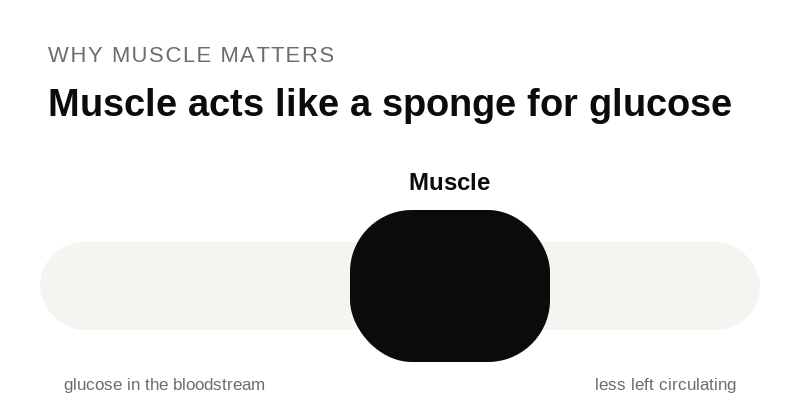
Muscle is a metabolically active organ. Dena says it acts like a sponge for glucose: as we age and our metabolisms slow down, having muscle on the frame helps prevent the development of diabetes, because it soaks up glucose that is circulating in the bloodstream.
Muscle also protects the bones. As women age they can become frail and develop osteopenia and eventually osteoporosis, and she says muscle helps prevent that. Her recommendation is to include resistance exercises in your routine a minimum of two days a week, though three or four days would be optimal.
Three things you can stop listening to
You may hear
Lifting will make you big and bulky.
Dena says
To get big and bulky you have to strength train very hard, very frequently, and eat a lot of food. No one is suggesting that for the average woman who is not seeking it.
You may hear
Plan your training around your cycle.
Dena says
Some very loud voices on social media promote cycle-specific training, but she says the research has shown there is no need to modify your training around your cycle. Listen to your body on the day instead. After a night of poor sleep you probably won't push quite as hard, and that would be true for anyone.
You may hear
That's just getting older.
Dena says
In perimenopause and menopause, women often develop difficulty sleeping and joint pain, though not every woman does. If a doctor answers with "that's just getting older", her advice is to walk out and find somebody else. There are hormonal and non-hormonal therapies that can help.
Start with one session a week
Any movement is better than no movement, so start with anything you want to try. Dena ultimately wants you lifting weights three to four days a week and doing cardio two to four days a week, but not in your first week.
"I don't want you to go from zero to five days a week in the gym because that will last a whopping one week."
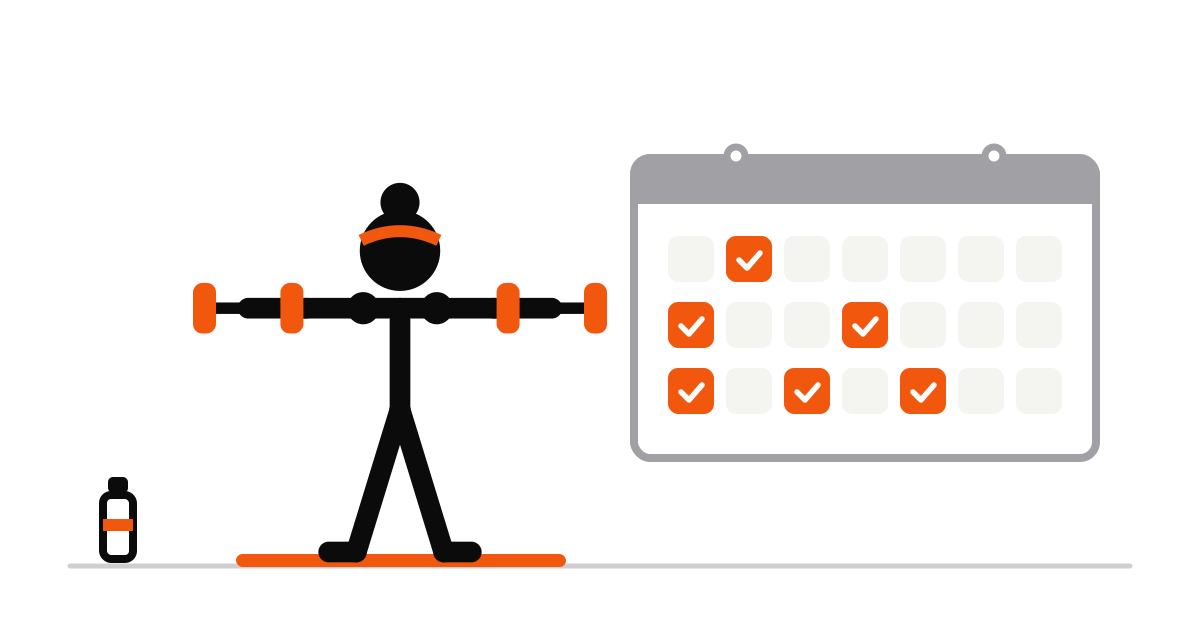
If you are not doing any strength training, she says one total body session per week is more than enough. Find something you enjoy.
One session a week
Keep it until you can't live without it and you are disappointed when you have to cancel.
Add a second
Make it a consistent part of your routine, the same way.
Add a third
When the gap between those two days feels too long.
Classes count
Dena is a huge fan of classes. They give you community and accountability, because a class you booked is on your calendar. Cardio is excellent for your heart, your lungs and your mental health, and she doesn't think women should stop doing it.
"Any movement is better than no movement. So if what's getting you to the gym is a spinning class or a Zumba class or a kickboxing class, that's great. Keep it up."
Weightlifting classes like BodyPump are excellent for learning how to lift. Eventually you reach the limit of what the class can do, because the weights in the classroom only go up so high. That is when to move into the weight room, where the skills you learned carry over. If it still feels intimidating, look into a personal trainer, even for one or two sessions.
Sore is normal, pain is not
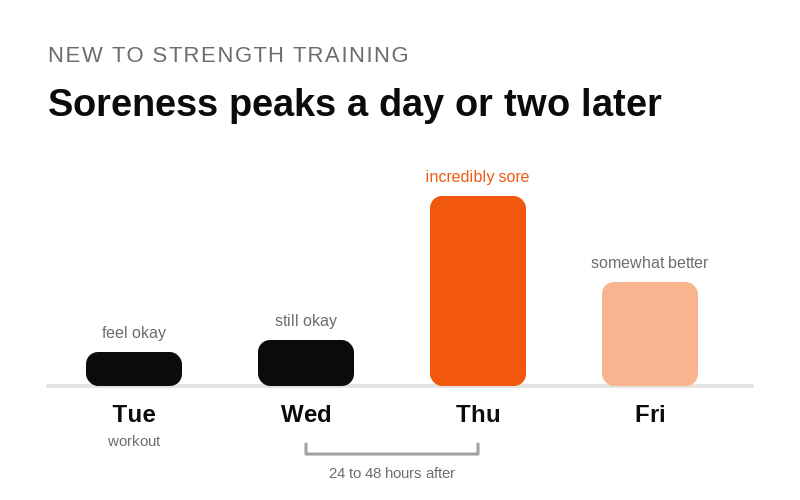
If you are new to strength training, muscle soreness is typically worst 24 to 48 hours after the workout. It's annoying, Dena says, but it is a sign you worked the muscles effectively. Pain is different: it might indicate an injury. Our post on avoiding, recovering from and training around injuries covers how to tell them apart.
Progress on most days, not every day
Dena calls progressive overload the key to putting on muscle and keeping it as you age: more weight, more reps or both, on most exercises in most workouts. The key word is most. Early on you can progress pretty quickly, and it is normal for that rate to plateau later.
Recovery matters at every age, and a little more as you get older. Sleep is key. If you are ill, don't train.
Where Shifu helps
When you start something new, Dena says, it helps to have structure and support. She says Shifu gives you a clear plan and guidance, with the ability to ask questions, across both fitness and nutrition. Her nutrition note is that women are typically under-eating protein.
"You can't out-train, you can't outrun, you can't out-Zumba a bad diet."
Start with one session this week. Add the second when you can't live without the first.

Dena Kranzberg is a board-certified women's health nurse practitioner (WHNP-BC), a NASM certified personal trainer and an IFBB Pro. She is the owner and chief clinician at Wellness Women's Health, a telehealth practice serving clients of all genders in eight states and counting with comprehensive health optimization care. She previously worked in precision medicine and healthy longevity at the Comite Center in New York and in perimenopause and menopause care at Midi Health, and has taught group fitness since 2008. She advises Shifu Health on women's health and does not see members directly.
Find her on Instagram at @denathednp, @denabetic and @wellness_womens_health.
This article is based on an interview with Dena Kranzberg, written by the Shifu Health team, and reviewed for accuracy by Dena Kranzberg, WHNP-BC.
Sources
- CDC. Adult Activity: An Overview. December 20, 2023.
- Currier BS, et al. ACSM Position Stand. Resistance training prescription for muscle function, hypertrophy, and physical performance in healthy adults: an overview of reviews. Medicine & Science in Sports & Exercise. 2026;58(4):851-872.
- Qadir R, et al. Effectiveness of resistance training and associated program characteristics in patients at risk for type 2 diabetes: a systematic review and meta-analysis. Sports Medicine - Open. 2021;7:38.
- LeBoff MS, et al. The clinician's guide to prevention and treatment of osteoporosis. Osteoporosis International. 2022;33(10):2049-2102.
- D'Souza AC, et al. Menstrual cycle phase does not influence training-induced muscle hypertrophy or strength: a randomized controlled trial. Medicine & Science in Sports & Exercise. 2026;58(10):2255-2273.
- Colenso-Semple LM, et al. Current evidence shows no influence of women's menstrual cycle phase on acute strength performance or adaptations to resistance exercise training. Frontiers in Sports and Active Living. 2023;5:1054542.
- Office on Women's Health, US Department of Health and Human Services. Menopause symptoms and relief. Updated October 19, 2026.
- The 2022 hormone therapy position statement of The North American Menopause Society. Menopause. 2022;29(7):767-794.
- The 2023 nonhormone therapy position statement of The North American Menopause Society. Menopause. 2023;30(6):573-590.
- Cleveland Clinic. Delayed-Onset Muscle Soreness (DOMS). Updated December 19, 2025.
- Sims ST, et al. International Society of Sports Nutrition position stand: nutritional concerns of the female athlete. Journal of the International Society of Sports Nutrition. 2023;20(1):2204066.
General wellness guidance only. Not medical advice, diagnosis, or treatment.