How to avoid, recover from and train around injuries
Written by Shifu Health teamPublished
Short answer
Most workout injuries come from doing too much too soon for what your body can handle right now. After time off, restart with a little less weight, fewer reps or fewer sets, then build back up. For a new injury, protect it for the first few days, then bring back gentle, progressive movement.
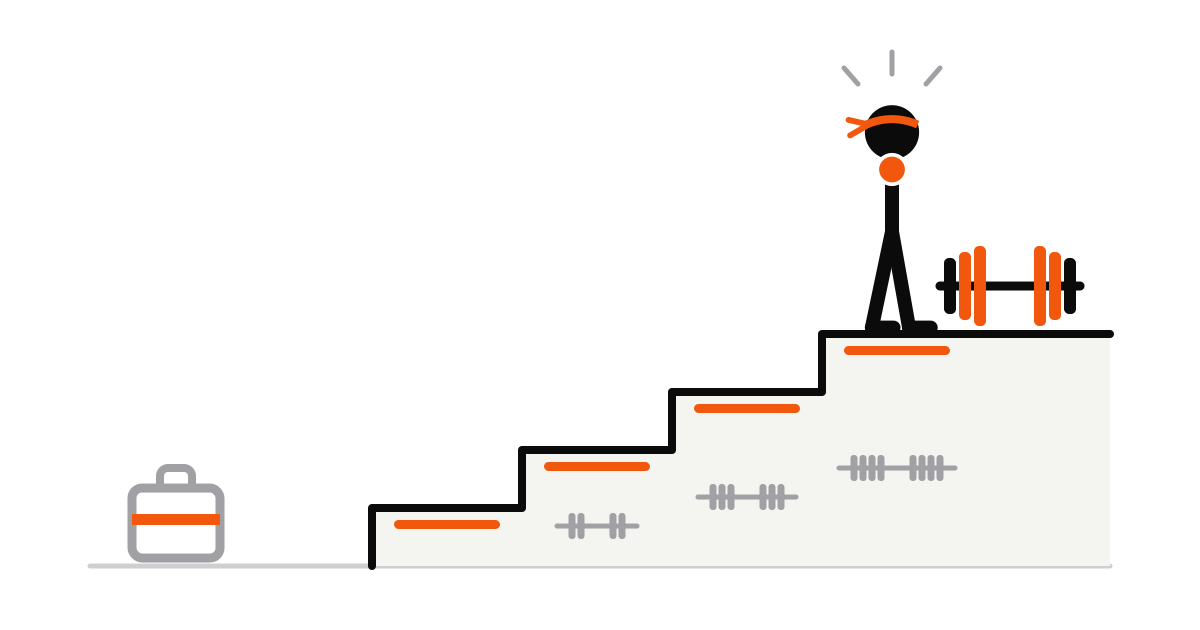
You take two weeks off for a vacation. You come back feeling fresh and pick your program up right where you left it. Within about a week, something goes wrong.
Aaron Snyder, a doctor of physical therapy and former professional basketball player who advises Shifu Health, hears this story from patients a lot. He says the most common reason people get injured when they work out tends to be doing too much too soon for whatever their body is capable of at that time. Here is his advice, sorted by what you are coming back from.
If you took a couple of weeks off
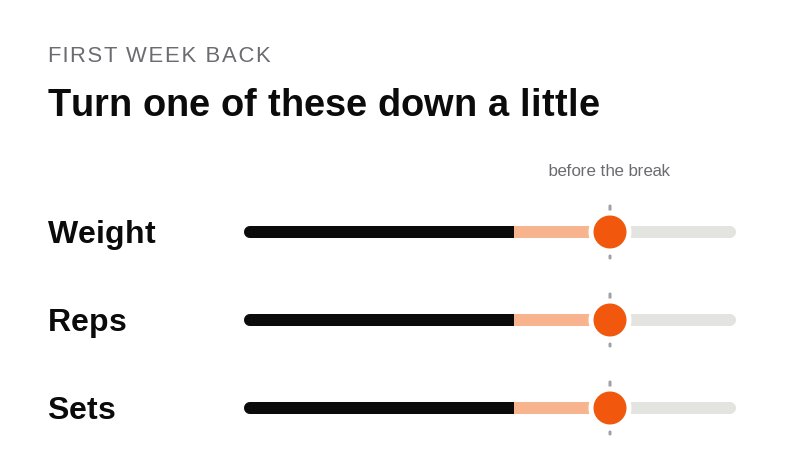
While you were away your capacity dropped and you got weaker, even if you feel rested. Aaron's advice is to be aware of how much time you took off and adjust for it: scale down the weight, the reps or the sets to something just a little bit less than what you were doing before. That gives you a conservative re-entry into your program.
If it has been years
Start slow, and manage your expectations of where you think you are. Aaron says a lot of people measure themselves against the weights they lifted playing sports in high school. If you haven't been exercising, he says, you start declining within a week.
"I will never forget I had an 80-year-old man that was like, I used to bench press 400 pounds in my forties. And he's like, I should still be strong. And I was like, no, you're not even close to that."
If you can't tell sore from hurt
Aaron says people often mix up pain and soreness, and that pain really shouldn't feel like soreness. With training experience the two are easier to tell apart, because they will generally be remarkably different.
Normal
The workout burn
- A dull burn
- Hard mentally to do
- Not pain
Telling you to stop
Injury pain
- Sharp
- Stabby
- Feels dangerous
"There's an inherent quality that feels dangerous about it."
If you just got hurt
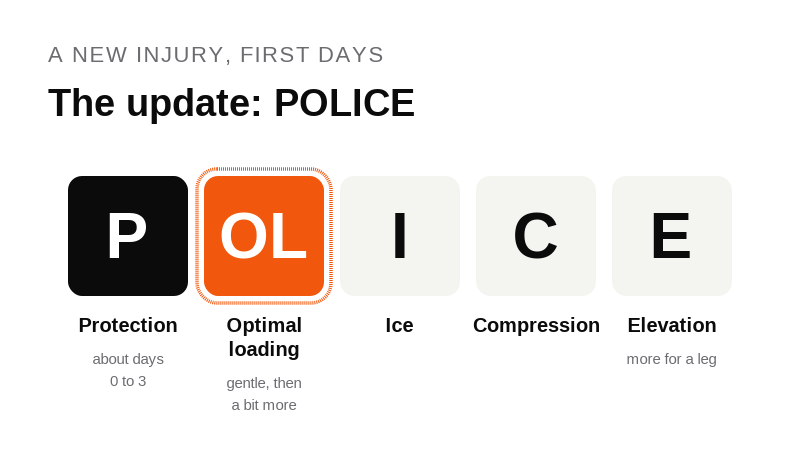
For a new injury, Aaron likes the acronym POLICE. He prefers it to the RICE method (rest, ice, compression, elevation), which he calls a little outdated.
Protection comes first: for about the first zero to three days, protect the injury and don't do anything you feel might be harmful. Then comes optimal loading. Once it feels like it is getting better, introduce gentle, progressive movement. Start light, work your way back up to what you were doing before, and monitor pain as you go. Ice, compression and elevation stay the same, with elevation more for a leg injury than a shoulder or an arm.
"Rest alone doesn't get it done. Ice, compression and elevation, those also don't just get it done by themselves. The optimal loading piece is really the key."
He adds that this part is why a lot of people see a physical therapist: often they don't know how to do it on their own.
If it is an old injury
Train it. What matters is how. Aaron says a prior injury is the highest risk factor for another injury, so whether you have done physical therapy or not, be a little more conservative with that side and load it progressively. Increase the weight only every week or maybe two weeks as you start to feel stronger, and let pain dictate how you progress. On a back squat or deadlift, that might be five or ten pounds a week.
"It's not that you can't train it, and I recommend that you do train it. It's more about how you train it."
If you run
The answer is the same, with weight swapped for mileage, pace and terrain. Going from the couch to running with a prior injury, Aaron might start with a slow jog for 10 to 15 minutes and work up from there. He says running injuries from a training error often don't pop up until three weeks later, so people tell him they were good for a month before something appeared.
The example that stands out to him is marathon runners: an overtraining injury, a week of rest, feeling great, then right back to a 15-mile run, and it hurts again.
What playing hurt taught him
Aaron played through injuries as a professional. Reflecting on it now, he says he didn't have access to the care he thought he needed, and he had to play a tryout with a high-level team at 80%. As a practitioner, he tries to get people out of that up-and-down cycle and back to 100%. It is why he values a quality resource like Shifu, and having "someone in your corner" to help you get back.
Whatever you are coming back from, his answer is the same: start below where you think you are, then load up progressively.

Aaron Snyder is a doctor of physical therapy and a board-certified Orthopedic Clinical Specialist (OCS). He is Head of Basketball Performance at Agile Physical Therapy in San Carlos, California, earned his DPT from the UCSF/SFSU joint program, and played professional basketball from 2013 to 2017, including two seasons in Girona, Spain. He advises Shifu Health on physical therapy and does not see members directly.
This article is based on an interview with Aaron Snyder, written by the Shifu Health team, and reviewed for accuracy by Aaron Snyder, PT, DPT, OCS.
Sources
- Soligard T, et al. How much is too much? (Part 1) International Olympic Committee consensus statement on load in sport and risk of injury. British Journal of Sports Medicine. 2016;50(17):1030-1041.
- Barbieri A, et al. Cardiorespiratory and metabolic consequences of detraining in endurance athletes. Frontiers in Physiology. 2024;14:1334766.
- Currier BS, et al. ACSM Position Stand. Resistance training prescription for muscle function, hypertrophy, and physical performance in healthy adults: an overview of reviews. Medicine & Science in Sports & Exercise. 2026;58(4):851-872.
- Cleveland Clinic. If You're Sore After a Workout, Should You Be Concerned? April 4, 2025.
- Bleakley CM, Glasgow P, MacAuley DC. PRICE needs updating, should we call the POLICE? British Journal of Sports Medicine. 2012;46(4):220-221.
- Green B, et al. Recalibrating the risk of hamstring strain injury (HSI): a 2020 systematic review and meta-analysis of risk factors for index and recurrent hamstring strain injury in sport. British Journal of Sports Medicine. 2020;54(18):1081-1088.
- van Poppel D, et al. Risk factors for overuse injuries in short- and long-distance running: a systematic review. Journal of Sport and Health Science. 2021;10(1):14-28.
- Warden SJ, Edwards WB, Willy RW. Preventing bone stress injuries in runners with optimal workload. Current Osteoporosis Reports. 2021;19(3):298-307.
General wellness guidance only. Not medical advice, diagnosis, or treatment.