The biggest nutrition mistake around workouts
Reviewed by
Brooke Caplinger, MS, RDN, LDN, CPT
Registered Dietitian Nutritionist · Certified Personal Trainer
Written by Shifu Health teamPublished
Short answer
The biggest nutrition mistake busy professionals make around workouts is not planning their food. Eat before your workout and after it: simple carbs before, protein and carbs after. Whatever your goal, eat enough to get the most out of the workout and recover from it.
"I don't have time. I don't have food at work. I don't know what to have." Brooke Caplinger, a registered dietitian and certified personal trainer on the Shifu Health care team, sees this very often in clients with demanding jobs.
The biggest nutrition mistake busy professionals make around workouts is not planning. People plan for their job and their family, and food often gets skipped. Instead of "I'll figure it out when I get there", Brooke's advice is to figure it out beforehand.
"I think that really the biggest mistake is just a lack of planning. You plan for everything else in your life, you plan for your job, you plan for your family [...] and often food gets skipped."
How to plan it
Brooke says planning food does not take a lot of time or effort; you just have to put a little thought into it. The return is high: more energy for work, for your family and for your workouts, and better results.
One option she gives is a couple of hours on the weekend to think about what you are having, go to the grocery store and do a little meal prep. If you have even less time, meal prep services can deliver food for you, and Shifu can plan your meals and make a grocery list. There are different levels of planning depending on how much time you have, from quick and simple to more elaborate.
"Do yourself a favor and figure it out beforehand. Let past you take care of it so future you feels better."
Should you eat before a 7 AM workout?
Yes. Overnight you often lose a little of your glycogen stores, so you start the morning a bit depleted. Carbohydrates are what give you energy during a workout, and skipping that snack makes a worse workout more likely.
Keep it simple, carb-forward and easy to digest, like a banana or a granola bar. If solid food is hard first thing, orange juice or a sports drink like Gatorade still gives your body some carbohydrate and sets you up for a better day.
"In that shorter window before a workout, you want to keep it pretty simple."
What should you eat before a 6 PM workout if lunch was at noon?
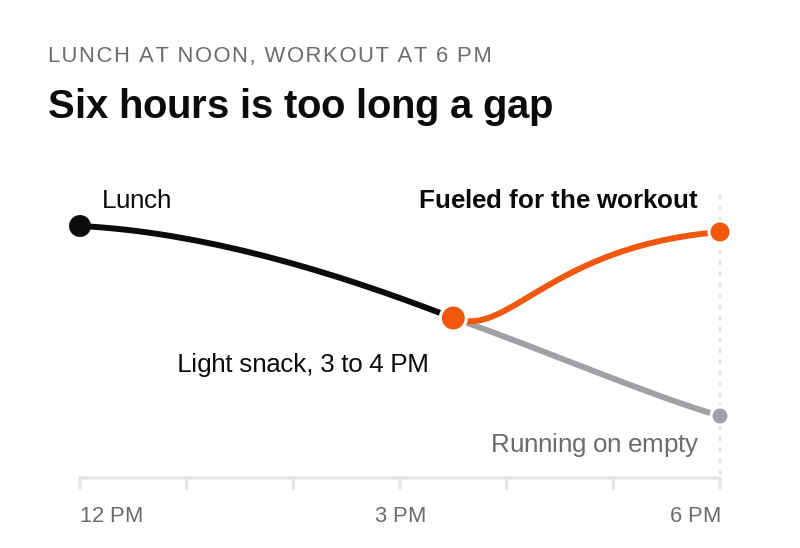
A six-hour gap between your last meal and your workout is too long, so have a light snack around 3 or 4 PM. A peanut butter and jelly sandwich, a yogurt bowl with granola, or a banana and a granola bar all work. If you ate a large meal three to four hours before your workout, you do not need the extra snack.
The closer you get to the workout, the less fiber and fat you want. They are slower to digest and sit heavier in your stomach, so an avocado salad with nuts is a poor choice right before training. About two hours out, a moderate amount of protein is fine, such as a turkey and cheese roll-up.
Is coffee before a workout a good idea?
Yes, if you enjoy it. Caffeine is one of six performance supplements in the Australian Institute of Sport's Group A, the group with strong scientific evidence behind it.
Most of the benefit of a pre-workout powder comes from its caffeine anyway. Brooke points out that pre-workouts can cost $1 to $2 a serving, contain a lot of other ingredients, are not always highly regulated, and often carry 200 to 300 mg of caffeine, more than you need before a workout. If you already drink coffee during the day, a pre-workout is just another added source of caffeine and another added cost. A cup of coffee or tea is a cheaper, easier source.
Caffeine is not meant to make up for bad sleep. Prioritize sleep first, and use caffeine for a little extra edge when you are already well rested.
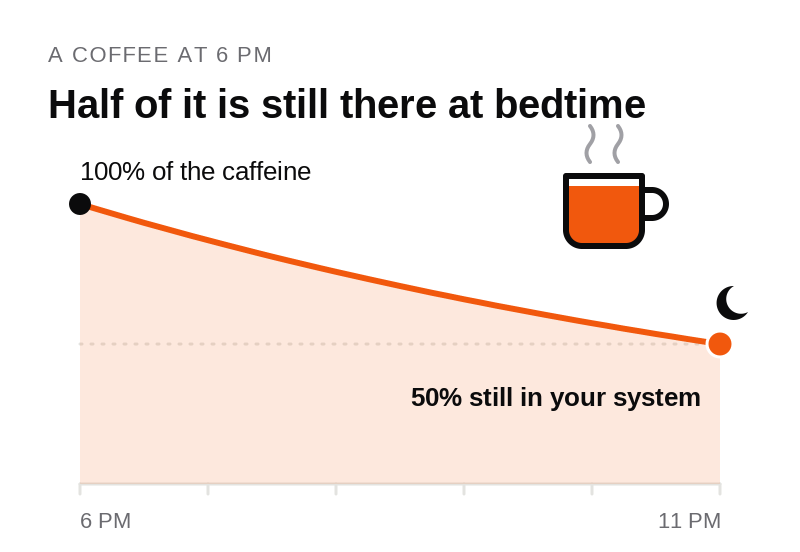
Working out in the evening? Watch the timing. Caffeine has a half-life of about five hours, so half of a 6 PM coffee is still in your system at bedtime and can affect your sleep. Brooke suggests a smaller dose, and testing which source, such as tea or coffee, works for you.
What should you eat after a workout, and how soon?
A post-workout meal is just as important as the pre-workout one. When to eat it depends on when your next meal is. If you will have a balanced meal with protein, carbs and vegetables within about two hours, for example a 3 or 4 PM workout and dinner at 5 or 6, that meal is enough. If your next meal is about five hours away, have carbs and protein within about 30 minutes.
Protein alone is not enough. The energy you used came from carbohydrates, and protein helps you repair and rebuild muscle; the two work together. Good options are a protein shake with a granola bar, a banana or pretzels, or a peanut butter and jelly sandwich. Chocolate milk works well too, since it gives you carbs, protein, fluid and electrolytes in one drink.
"They really go hand in hand, and one can't do its job good without the other. They kind of need both to work."
Should you eat differently to lose fat or build muscle?
Not much around the workout. Whatever your goal, you need enough energy to complete the workout and push hard, and you need to refuel afterwards to recover. Brooke's pre-workout snack would be about the same for both, maybe with a bigger portion for someone building muscle.
The real difference is in the meals outside of training: smaller meals and a calorie deficit for fat loss, larger meals and a surplus for muscle gain.
Does working out on an empty stomach burn more fat?
Slightly, at most. With less carbohydrate available, your body turns to fat, its second preferred source of energy. But you will feel worse and get less out of the workout, and the small extra fat burned does not make up for that.
Separately from eating, Brooke says there is some evidence that low-intensity steady-state cardio, at a conversational pace like a brisk walk or an incline treadmill, draws a little more on fat. That may help if fat loss is your goal.
Does it change for strength vs endurance?
Yes. Brooke says this is a good example of where her advice does change, because the training goal is different. A lot of people do a mix, and the general advice above works for them. If you are serious about strength training and building muscle, protein matters a little more, and carbs before a workout are still important but less critical than for endurance. Half a bagel before a lifting session might be enough.
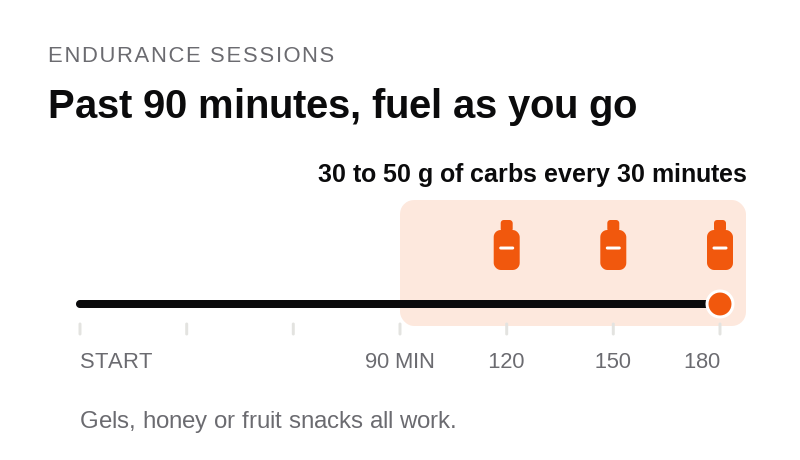
For endurance sessions longer than an hour, and especially longer than 90 minutes, eat more carbs before, such as the whole bagel, and take in carbs during the session from gels, honey or fruit snacks. Past the 90-minute mark, Brooke recommends 30 to 50 grams of carbs every 30 minutes. Strength athletes don't need to worry about carbs during a session as often, since lifting workouts are hopefully not much longer than 90 minutes, and longer ones have a lot of rest mixed in. Endurance athletes need more carbs both before and after training.
Where Shifu helps
Shifu is the assistant you text at Shifu Health. It can take the planning off your plate:
- Plans your meals and your grocery list, so the food is decided before the week starts.
- Texts you at the right time, like a nudge to have a snack at 3 PM before a 6 PM workout, or to eat after it.
- Logs meals from a photo, so you can see whether you are eating enough around training.
- Connects you with a registered dietitian like Brooke when you want an expert to look at your plan.
If you remember one thing: eat before your workout and after it. Carbs before, protein and carbs after. Whatever your goal, make sure you are eating enough to get the most out of your workouts, recover from them and feel better for the rest of the day.

Brooke Caplinger, MS, RDN, LDN, CPT, is a registered dietitian nutritionist and certified personal trainer licensed in Massachusetts. She has been a personal trainer for six years, works as a school dietitian with Chartwells K-12, provides individualized nutrition counseling through Nourish, and is part of the Shifu Health care team. Her work focuses on meal prep, body recomposition, muscle gain, weight loss and helping beginners start lifting.
This article was written by the Shifu Health team and reviewed for accuracy by Brooke Caplinger, MS, RDN, LDN, CPT.
Sources
- Australian Institute of Sport. Group A supplements.
- US Food and Drug Administration. Questions and answers on dietary supplements.
- Gardiner C, Weakley J, Burke LM, et al. The effect of caffeine on subsequent sleep: a systematic review and meta-analysis. Sleep Medicine Reviews. 2023;69:101764.
- Cleveland Clinic. What to eat before and after a workout. 2026.
- King A, Helms E, Zinn C, Jukic I. The ergogenic effects of acute carbohydrate feeding on resistance exercise performance: a systematic review and meta-analysis. Sports Medicine. 2022;52:2691–2712.
- Naderi A, Rothschild J, et al. Nutritional strategies to improve post-exercise recovery and subsequent exercise performance. Sports Medicine. 2025;55(7):1559–1577.
- Podlogar T, Wallis GA. New horizons in carbohydrate research and application for endurance athletes. Sports Medicine. 2022;52(Suppl 1):5–23.
General wellness guidance only. Not medical advice, diagnosis, or treatment.