Strong glutes, happy hips: notes from trainer Katie Callo
Written by Shifu Health teamPublished
Short answer
Strong glutes give you lower-body power and take load off your back. For hips that feel tight from sitting, add movement to your stretches. Katie recommends at least one exercise that activates each glute muscle and at least one unilateral (single-leg) exercise per leg day. Ultimately, match the volume of your exercises (weights, sets and reps) to your individual goals.
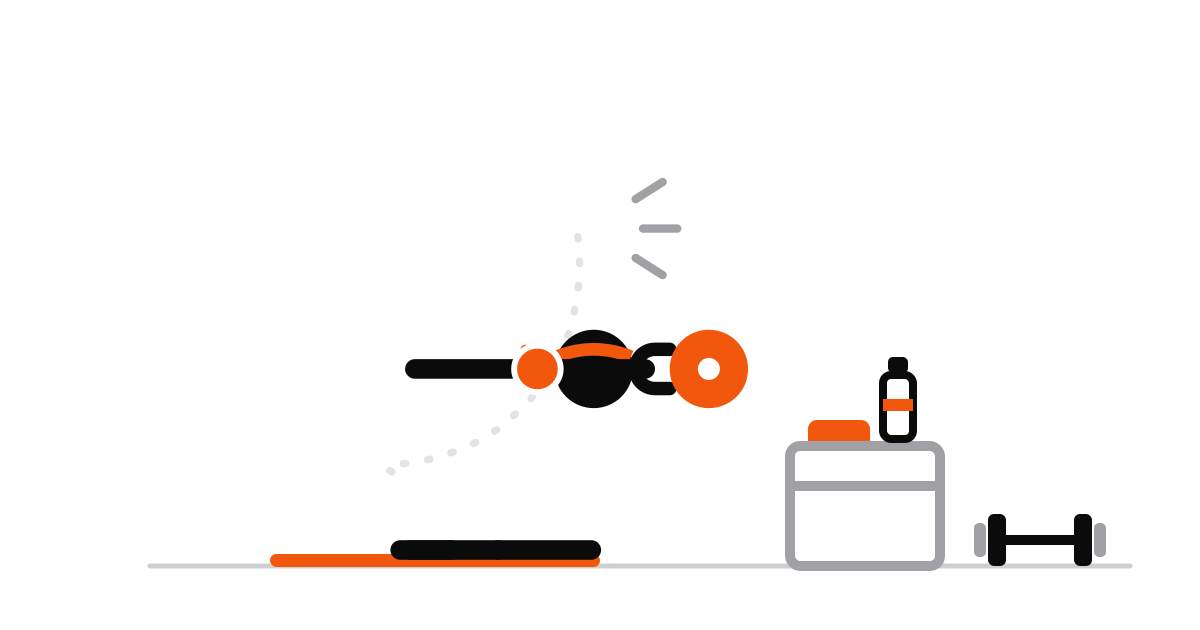
Your glutes are one of the largest muscle groups in your body. Katie Callo, a certified personal trainer on the Shifu Health care team who set the Guinness World Record for the heaviest female hip thrust in 2024 (605 lbs), says it is really important to have strong glutes for performance, "even beyond the aesthetic reasons". Here is how she thinks about training your glutes and hips.
Strong glutes are about more than looks
Strong glutes give you a lot of power, especially lower-body power. Katie says that matters whether you are training for a specific athletic event or whether performance, to you, means a longer life with less pain, especially less back pain.
"If your glutes are weak and your core's weak, your back's gonna have to compensate for those two a lot."
Tight hips? Add movement
Katie says one of the bigger misconceptions about hip tightness is that a muscle feels tight because it is physically shortened. That is not necessarily true in each case. When you sit for long periods your hips stay in flexion, and over time you may experience muscle stiffness.
"Oftentimes it's because we're used to being in a specific position that we're not moving too much out of."
Her recommendation is to add a lot of dynamic stretching to your routine. Holding a stretch like pigeon pose is great. To work on mobility beyond flexibility, she recommends adding movement to it: hinge your hips back, fold forward and sit back up again. Frog pose works the same way.
Strength is more of a factor when you move your leg away from the midline of your body (abduction), which relies on the glute medius. Among the clients she has worked with who have a lot of discomfort, though, she thinks the majority comes down more to mobility than to strength.
One exercise for each muscle, and one on a single leg
Your glutes are three muscles: the gluteus maximus, medius and minimus. The maximus is the majority of your glute. The medius is, in Katie's words, "kind of like the shelf part", and it takes control whenever you drive your knees away from each other.
For the maximus, her personal favorite is the hip thrust, and any hip extension works, including hyperextensions and RDLs (Romanian deadlifts). For the medius and minimus, she says the abduction machine is great, and at home she is a big supporter of banded clamshells. If you are just starting out, finding one exercise in each category is really helpful. Which one comes down a lot to personal preference.
"It's important to also play around with different exercises and see what feels good in your body, what you enjoy."
Katie is also a huge fan of single-leg work, because the stability it demands works the medius and minimus. Her list includes Bulgarian split squats, step-ups, cable kickbacks and single-leg RDLs, and she recommends at least one in your leg day routine.
Let your goal set the reps
Katie thinks how you train your glutes is less a matter of sex or gender and more a matter of you as an individual and your goals: your sport, an aesthetic goal or a fun milestone you want to break. If you are working with medical professionals and they have recommended interventions, she would prioritize those first.
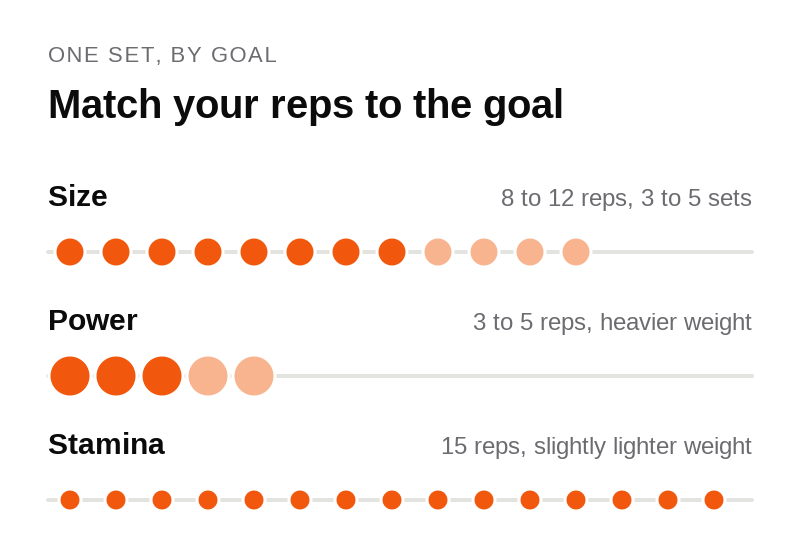
For size (hypertrophy), she says a lot of the literature suggests 8 to 12 reps for three to five sets. For power, it is heavier weight in a lower rep range: you can see powerlifters hitting only three to five reps. For stamina, it is higher volume in general. She might do 15 cable kickbacks at a slightly lighter weight.
Training is not the whole picture. Katie says nutrition plays a huge role in getting bigger glutes: if you are not eating enough, especially not enough protein, you will not see as much growth.
Where Shifu helps
Katie sees a gap in fitness: there are a lot of tools to measure your progress, but people do not keep using them long term. After a workout, she says, it is much easier to text Shifu what you did than to keep an old-school journal, and you can then ask for trends in your weight, volume and rep ranges. Alongside that, there are real people and coaches working with you.
Start small: find one exercise for each muscle, and add one single-leg exercise to your leg day.

Katie Callo is a certified personal trainer and Pilates instructor on the Shifu Health care team. She works with UCLA Recreation's FITWELL program in Los Angeles, set the Guinness World Record for the heaviest weighted hip thrust by a female in 2024 (605 lbs), is a certified Diabetes Prevention Program coach through UCLA Health, and currently teaches boxing at Equinox.
This article is based on an interview with Katie Callo, written by the Shifu Health team, and reviewed for accuracy by Katie Callo, ISSA Certified Personal Trainer.
Sources
- Cleveland Clinic. Gluteal Muscles (Glutes). Reviewed October 2, 2025.
- Ceballos-Laita L, et al. The effectiveness of hip interventions in patients with low-back pain: a systematic review and meta-analysis. Brazilian Journal of Physical Therapy. 2023.
- Boukabache A, Preece SJ, Brookes N. Prolonged sitting and physical inactivity are associated with limited hip extension: a cross-sectional study. Musculoskeletal Science and Practice. 2021.
- Behm DG, et al. Acute effects of various stretching techniques on range of motion: a systematic review with meta-analysis. Sports Medicine - Open. 2023.
- Currier BS, et al. ACSM Position Stand. Resistance training prescription for muscle function, hypertrophy, and physical performance in healthy adults: an overview of reviews. Medicine & Science in Sports & Exercise. 2026;58(4):851-872.
- Schoenfeld BJ, et al. Loading recommendations for muscle strength, hypertrophy, and local endurance: a re-examination of the repetition continuum. Sports. 2021.
- Nunes EA, et al. Systematic review and meta-analysis of protein intake to support muscle mass and function in healthy adults. Journal of Cachexia, Sarcopenia and Muscle. 2022.
- Guinness World Records. Heaviest weighted hip thrust (female).
General wellness guidance only. Not medical advice, diagnosis, or treatment.